Tricholoma

Cut Tricholoma

Shiitake mushroom
Lentinus edodes belongs to Basidiomycetes, Amatomycetes, Tricholomataceae (Tricholomatacete), Lentinus edodes (Lentinus), scientific name Lentinus edodes, originated in China, is the second largest mushroom in the world, and is also a famous precious edible fungus in China. China's earliest cultivation of mushrooms, has more than 800 years of history. Shiitake is also a famous medicinal mushroom in China. Chinese medical scientists have written about the medicinal properties and functions of Lentinus edodes. Lentinus edodes is a kind of food with the same source of food and medicine, with high nutritional, medicinal and health value.
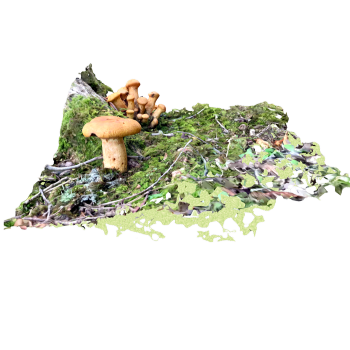
Orange naked umbrella
Gymnopilus junonius is a fungus in the family Ascomycota. The diameter of the cap is 8-30 centimeters, protruding to flat. Younger specimens appear bright yellow orange, while older specimens appear orange brown or reddish brown, with a dry scaly surface. The flesh is yellow in color, with a mild odor and a bitter taste.
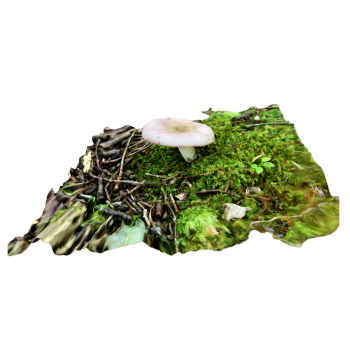
russula cyanoxantha
Blue, yellow, and red mushrooms are edible fungi distributed in Northeast China. The sub entity is medium to slightly larger. The cap has a diameter of 5-12cm, is flattened and semi spherical, concave when extended, and has a variety of colors, dark purple gray, purple brown, or purple gray with a hint of green. As it ages, it often appears light green brown or green gray, with mixed colors, sticky, thin epidermis, easy to peel off from the edges, and sometimes cracked. The edges are smooth or have indistinct stripes. Mushroom flesh is white, with a light red or purple color beneath the epidermis. No odor, good taste.
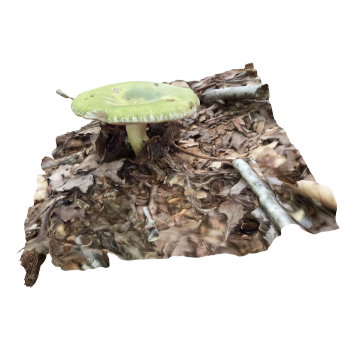
russula cyanoxantha
Blue, yellow, and red mushrooms are edible fungi distributed in Northeast China. The sub entity is medium to slightly larger. The cap has a diameter of 5-12cm, is flattened and semi spherical, concave when extended, and has a variety of colors, dark purple gray, purple brown, or purple gray with a hint of green. As it ages, it often appears light green brown or green gray, with mixed colors, sticky, thin epidermis, easy to peel off from the edges, and sometimes cracked. The edges are smooth or have indistinct stripes. Mushroom flesh is white, with a light red or purple color beneath the epidermis. No odor, good taste.

Chongmai Ghost Pen
The fruiting body is generally small, with a height of 8-10cm. When young, it is wrapped in a white oval bag, and when it cracks, the stem elongates. The cap is bell shaped, with irregular raised mesh patterns, yellow to bright yellow, or orange yellow with dark green mucus (spore body), and has a fishy odor. The handle is nearly cylindrical, white yellow or light yellow, hollow and sponge like. The bacterial tray is white, bract shaped, thick, and about 3cm high. Regarded as edible mushrooms in Japan.

mushroom
Qingtou fungus grows in pine or coniferous forests, broad-leaved forests, or mixed forests, with a growing season in summer and autumn each year, and a high yield after rain. They all appear in pairs, and if one is found in the deep forest, another one must be found within a range of no more than one meter, with a medium to slightly larger fruiting body. The cap is initially spherical and has a protective color similar to that of green grass, making it difficult to detect. Quickly flattened into a semi spherical shape and gradually extended, with a slightly concave center that is not sticky, ranging from light green to grayish green. The skin often cracks in spots, and there are stripes on the edges when old. Mushroom meat is white. The gills are white, dense, of equal length, and have transverse veins. The mushroom stem is long, solid, or soft inside, edible, and has a delicious taste.

Proposed Orange covered Goose Paste
Amanita caesarea (Scop.) Pers. is a fungus belonging to the Amanita family and the Amanita genus. The fruiting body is large, with a fungal curtain when the bacterial cells are young, gradually spreading out, slightly protruding in the middle, bright orange yellow to orange red, and with obvious stripes on the edges. Mushroom meat is white. The gills are yellow, thick, and the stem is cylindrical in shape, light yellow. The upper part of the stem is surrounded by bacteria, light yellow, membranous, and drooping, with fine stripes on top. The bacterial tray is large, white, and the spore print is white. Spores are colorless, smooth, broadly elliptical to ovoid in shape.

Mushroom clusters
Mushrooms belong to the order Basidiomycota, order Agaricales, family Tricholomatacete, and genus Lentinus. The scientific name Lentinus edodes originated in China and is the world's second-largest mushroom. It is also a precious edible mushroom that has long been renowned in China. The earliest cultivation of shiitake mushrooms in China has a history of over 800 years. Mushrooms are also famous medicinal mushrooms in China. Chinese pharmacologists throughout history have written about the medicinal properties and functions of shiitake mushrooms. Mushrooms have thick and tender meat, delicious taste, unique aroma, and rich nutrition. They are a food with both food and medicine, and have high nutritional, medicinal, and health value.
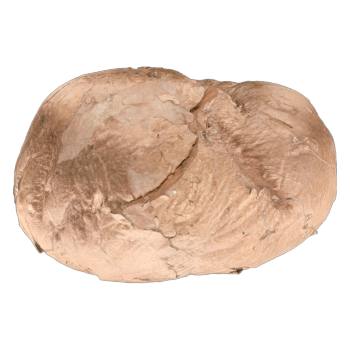
Big bald horse
Da Tu Ma Bo, also known as Tu Ma Bo, scientific name Calvatia gigantea (Batch: Fr.) Lloyd, belongs to the subphylum Basidiomycota, order Bacteroidetes, family Fabaceae, and genus Tu Ma Bo. Usually rot on soil, decaying wood, or tree stumps. Some types of sub entities are extremely large, with the largest exceeding 1m. Basidiocarps are spherical, pear shaped, conical or human shaped, and can be consumed when young.

Chicken oil fungus
Chicken oil fungus is a fungus belonging to the Chicken oil fungus genus in the Chicken oil fungus family, also known as egg yolk fungus, yellow fungus, apricot fungus, etc. Chicken oil mushroom fruiting body is fleshy, trumpet shaped, apricot yellow to egg yellow. The cap is 3-10 centimeters wide and 7-12 centimeters high, initially flat, gradually concave, with an extended edge, wavy or petal shaped, and rolled inward. The mushroom meat is slightly thick and egg yellow. The gills are angular, narrow, and extend downwards to the stem, branching or interwoven with transverse veins to form a network. They are the same color as or slightly lighter than the cap. The stem is 2-8 centimeters long and 5-8 millimeters thick, cylindrical in shape, sometimes slightly thinner or larger at the base, and is the same color or slightly lighter than the cap. Spores are elliptical or oval in shape, colorless; Spore print is yellow white.

mushrooms
Mushrooms belong to the order Basidiomycota, order Agaricales, family Tricholomatacete, and genus Lentinus. The scientific name Lentinus edodes originated in China and is the world's second-largest mushroom. It is also a precious edible mushroom that has long been renowned in China. The earliest cultivation of shiitake mushrooms in China has a history of over 800 years. Mushrooms are also famous medicinal mushrooms in China. Chinese pharmacologists throughout history have written about the medicinal properties and functions of shiitake mushrooms. Mushrooms have thick and tender meat, delicious taste, unique aroma, and rich nutrition. They are a food with both food and medicine, and have high nutritional, medicinal, and health value.

boletus impolitus
Boletus impolitus, also known as yellow brown boletus, is a fungus belonging to the genus Boletus. There are small germination holes on the mushroom umbrella. They are edible mushrooms, but they are rarely consumed. They will grow on the oak genus. The umbrella of the yellow brown boletus mushroom first takes on a hemispherical shape, gradually becoming flattened or even inverted. The mushroom umbrella initially appears gray white, but later becomes light brown or yellow brown, often with the appearance of being hammered. The diameter of the mushroom umbrella is 5-15 centimeters wide and can reach up to 20 centimeters.

Oyster mushroom
Pleurotus ostreatus is a fungus belonging to the genus Pleurotus in the family Pleurotus. The fruiting bodies are clustered or stacked, and the cap is covered in tile like clusters, fan-shaped, shell shaped, and irregular funnel-shaped. The flesh of the mushroom cap is thick and soft. The surface color of the bacterial cap changes under the influence of light, with darker light intensity and lighter light intensity. The gills are white in color, with varying lengths. The longer ones extend from the edge of the cap to the stem, while the shorter ones only have a small section at the edge of the cap, forming a fan-shaped structure. Fungi stem lateral or lateral, white, medium solid; The mycelium is white, thick and powerful, and the flesh is white, slightly thick, and soft.

A withered tree covered in mushrooms and moss
Pleurotus ostreatus, scientific name, is a fungus of the genus Pleurotus in the family Pleurotus. It is an edible fungus that is rich in nutrients. The fruiting bodies are clustered or stacked, and the cap is covered in tile like clusters, fan-shaped, shell shaped, and irregular funnel-shaped. The flesh of the mushroom cap is thick and soft. The surface color of the bacterial cap changes under the influence of light, with darker light intensity and lighter light intensity. The gills are white in color, with varying lengths. The longer ones extend from the edge of the cap to the stem, while the shorter ones only have a small section at the edge of the cap, forming a fan-shaped structure. Fungi stem lateral or lateral, white, medium solid; The mycelium is white, thick and powerful, and the flesh is white, slightly thick, and soft.

Popular Models
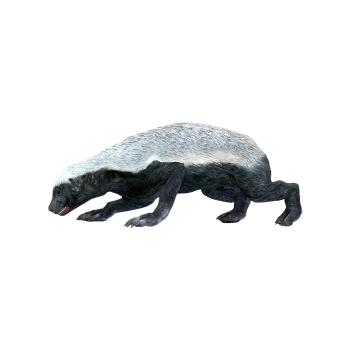
Honey Badger (3D animated model)
194 View
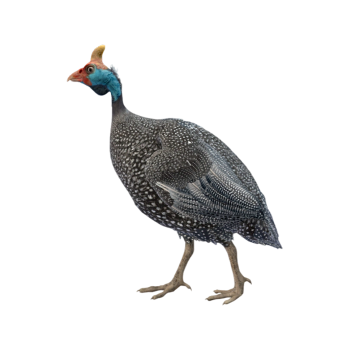
Guinea fowl (3D animated model)
165 View
Wild Goose (3D animated model)
187 View
Red Fox (3D animated model)
155 View
Random Model
walnut combination
527 View


Vintage air dryer
729 View

spotted deer specimen
1131 View

Medieval retro windmill house
924 View

Ayoka Temple Pagoda
590 View

Cypress bonsai
1140 View
Floor lamp
666 View